The Benefits of Whole-House Fans for Cooling Efficiency
Is your home stuffy, even with the AC running? Or maybe your business space just doesn’t feel fresh, no matter how low you set the thermostat. You’re not alone. Many homeowners and business owners feel trapped between high energy bills and uncomfortable indoor air.
At Right On AC, we’ve seen how whole-house fans can flip the script on cooling—helping you breathe easier and spend less. Let’s break down why these fans might be the missing piece in your comfort puzzle.
What Is a Whole-House Fan? 🌀
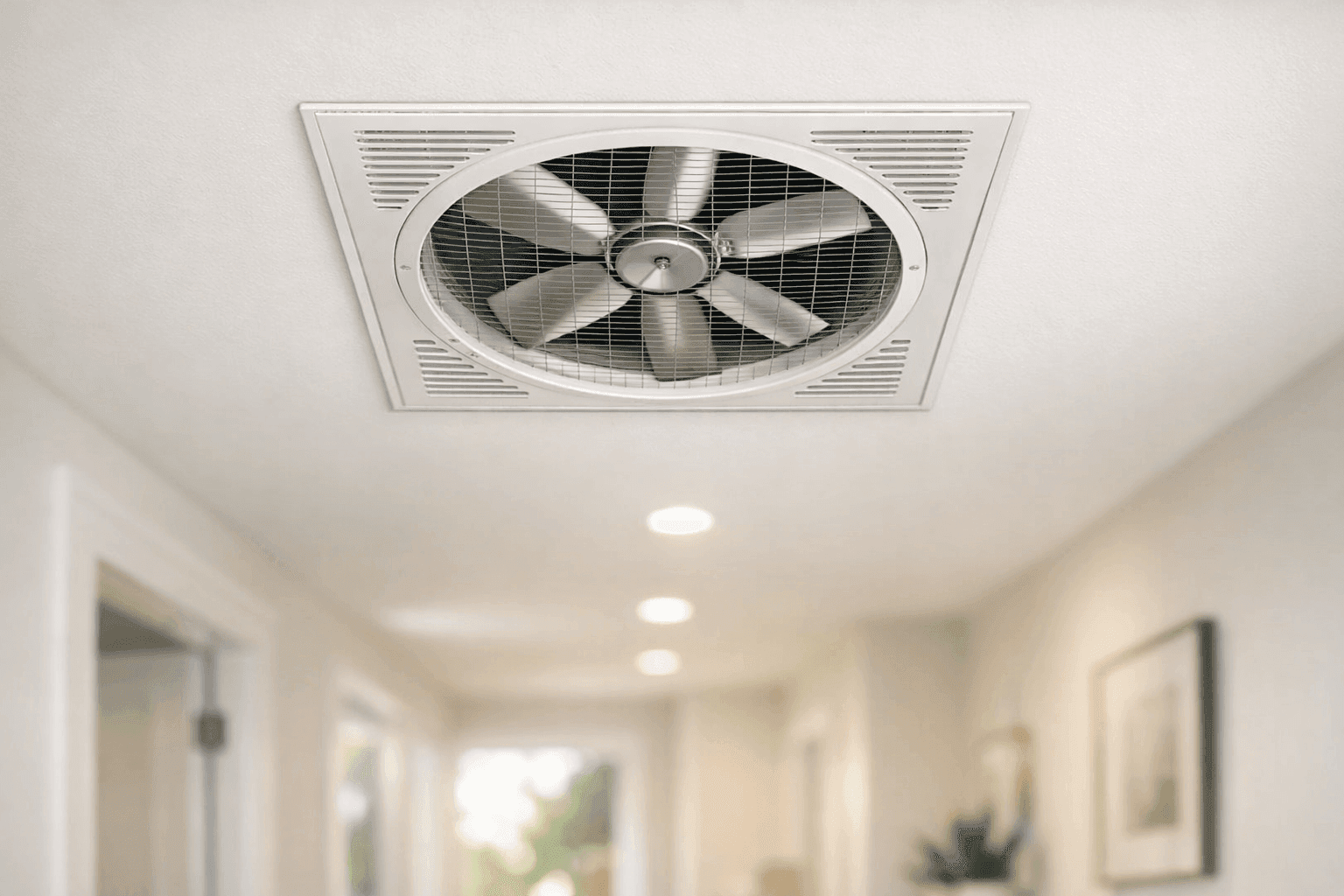
A whole-house fan is like a gentle breeze that sweeps through every room. Installed in the ceiling, it pulls cooler outdoor air inside while pushing warm, stale air out through attic vents. Unlike a standard ceiling fan or exhaust fan, this system works for your entire building—so each room gets refreshing airflow.
Think of it as a “reset” button for your home’s air. Flip it on when the temperature drops outside (usually morning or evening), and you’ll notice a difference in minutes.
How Do Whole-House Fans Cool Homes?
Here’s the science: Hot air rises. When your home heats up during the day, that warmth gets trapped in the attic and upper floors. A whole-house fan creates a pressure difference. As it spins, it draws in cool, fresh air through open windows and pushes hot air out through attic vents.
This process can lower the indoor temperature by several degrees—sometimes as much as 10°F or more in the right conditions. The best part? It works fast. Within 15–30 minutes, your space can go from stifling to soothing.
Energy Savings: Lower Bills, Lighter Footprint
Traditional air conditioning is powerful, but it guzzles electricity. Whole-house fans use a fraction of the energy—often just 10–15% of what central AC would need for the same cooling effect.
- Lower utility bills: Many homeowners see savings of $100–$300 per cooling season.
- Reduced AC wear and tear: Your AC doesn’t have to work as hard, which extends its lifespan.
- Environmentally friendly: Using less energy means fewer greenhouse gas emissions.
The U.S. Department of Energy notes that whole-house fans are among the most efficient cooling tools for homes in climates with cool nights and low humidity.
Installation Considerations: What to Know Before You Start
Not every home or business is a perfect fit for a whole-house fan. Here’s what to consider:
- Attic space: You’ll need enough attic ventilation to let warm air escape efficiently.
- Electrical needs: Proper wiring is essential for safe, reliable operation.
- Window access: The system works best when several windows can be opened for cross-ventilation.
- Noise: Some models are whisper-quiet, while others hum louder. Placement and insulation make a difference.
- Integration with existing cooling: Whole-house fans can be a team player alongside your AC Installation or Ventallation system.
If you’re not sure what your building needs, professional consultation helps avoid costly missteps.
Maintenance Matters: Keeping Your Fan in Top Shape
Just like any mechanical system, whole-house fans need regular attention. Here’s how to keep yours running smoothly:
- Inspect belts and blades: Look for wear, dust buildup, or loose fasteners each season.
- Clean intake grills: Dust and debris can restrict airflow and create noise.
- Check attic vents: Make sure nothing is blocking air movement to the outside.
- Test controls: Switches and timers should work reliably every time you need them.
Annual Whole-House Fans from a trusted cooling contractor can catch issues early and keep your system humming along.
Whole-House Fans vs. Traditional AC: Complement, Don’t Compete
Whole-house fans aren’t meant to replace your air conditioner entirely—especially during heat waves or high humidity. Instead, they’re a powerful sidekick. Use the fan in the early morning or after sunset to flush out trapped heat. Then, let your AC handle the hottest hours. This tag-team approach maximizes comfort while shrinking your energy bill.
Comfort for Every Room: Even Hard-to-Reach Spaces
Does your upstairs bedroom turn into a sauna every summer night? Or maybe your attic office feels like a greenhouse? Whole-house fans can transform those problem areas. By equalizing airflow throughout your home, they reduce hot spots and create a more balanced, comfortable environment—without endless thermostat battles.
Quick Safety Checklist Before Use
Safety is always first. Here’s what to check before turning on your whole-house fan:
- Windows and doors should be open in the rooms you want to cool.
- Attic vents must be clear and unobstructed.
- Never run the fan if your fireplace is in use (to avoid pulling soot or gases indoors).
- Make sure children and pets can’t easily access moving fan parts.
Following manufacturer instructions and referencing National Electrical Code guidelines ensures safe operation.
DIY or Call a Pro? When to Get Help
Installing a whole-house fan can be trickier than it looks. It involves electrical work, attic access, and sometimes modifying vents or rafters. If you’re handy with tools and familiar with local codes, a DIY approach might be possible. But for most homeowners and all commercial properties, professional installation is the safer bet.
Qualified installers, like those at Right On AC, make sure your system is sized correctly, wired safely, and set up for peak efficiency.
What Pros Do On Arrival
When you call a pro for installation or service, here’s what usually happens:
- They’ll inspect your attic and current ventilation setup.
- Measure airflow needs based on your building’s square footage.
- Recommend fan models that fit your space and budget.
- Handle all wiring, mounting, and testing.
- Show you how to operate and maintain your new system.
No guesswork. No surprises. Just a system that works.
Costs & Time Factors
Most whole-house fan installations take a day or less. Costs vary based on fan size, attic modifications, and wiring needs. Expect a range from $900 to $2,500, with higher-end models for larger homes or businesses. While this is an investment, the drop in monthly utility bills often pays back the cost in just a few seasons.
When It’s an Emergency: Hot Weather and Power Outages
During a summer heatwave, every degree matters. If your AC quits unexpectedly, a whole-house fan can be a lifesaver—moving air fast to keep temperatures and stress down. And if you’ve paired your system with Whole-House Fans, you’ll have backup cooling even during outages.
Seasonal Considerations: Best Times to Run Your Fan
Whole-house fans shine during spring, early summer, and fall—when nights are cool and outdoor air is crisp. In humid climates or during peak heat, limit use to evenings and mornings. Always double-check weather conditions and local air quality alerts.
Common Mistakes to Avoid
- Forgetting to open enough windows (can put strain on the motor or reduce cooling).
- Ignoring attic vent size—too small, and airflow stalls.
- Skipping regular cleaning, leading to dust buildup and loss of efficiency.
- Running the fan when outdoor air is hotter or more polluted than inside.
Smart use keeps your fan efficient, safe, and long-lasting.
Signs of Trouble: When to Call for Service
Listen and watch for:
- Unusual noises (grinding or rattling)
- Weak airflow from vents
- Vibration or shaking when the fan runs
- Electrical smells or flickering controls
If anything seems off, it’s best to shut down and call a qualified technician.
Integrating with Existing Cooling Systems
Whole-house fans and modern AC units can work together for better comfort and savings. For example:
- Use the fan to pre-cool your house in the evening, then switch to AC during midday heat.
- Pair with programmable thermostats for seamless transitions.
- Add air quality upgrades, like filters or air scrubbers, to keep indoor air fresh while you ventilate.
Curious how this fits into your unique property? Our team is happy to help you plan the right solution.
City-Specific Cooling Solutions
If you’re searching for tailored cooling services in Des Moines, our team understands the local weather patterns and building codes that matter most.
Final Thoughts: A Breath of Fresh Air
Whole-house fans are more than just a breeze—they’re a smart, affordable way to boost cooling, comfort, and indoor air quality for both homes and businesses. With the right setup and regular care, you’ll enjoy fresher air and lower bills all season long.
Call Right On AC now — or reach us anytime at 888-836-1269 .