How to Choose the Right Thermostat for Your Space
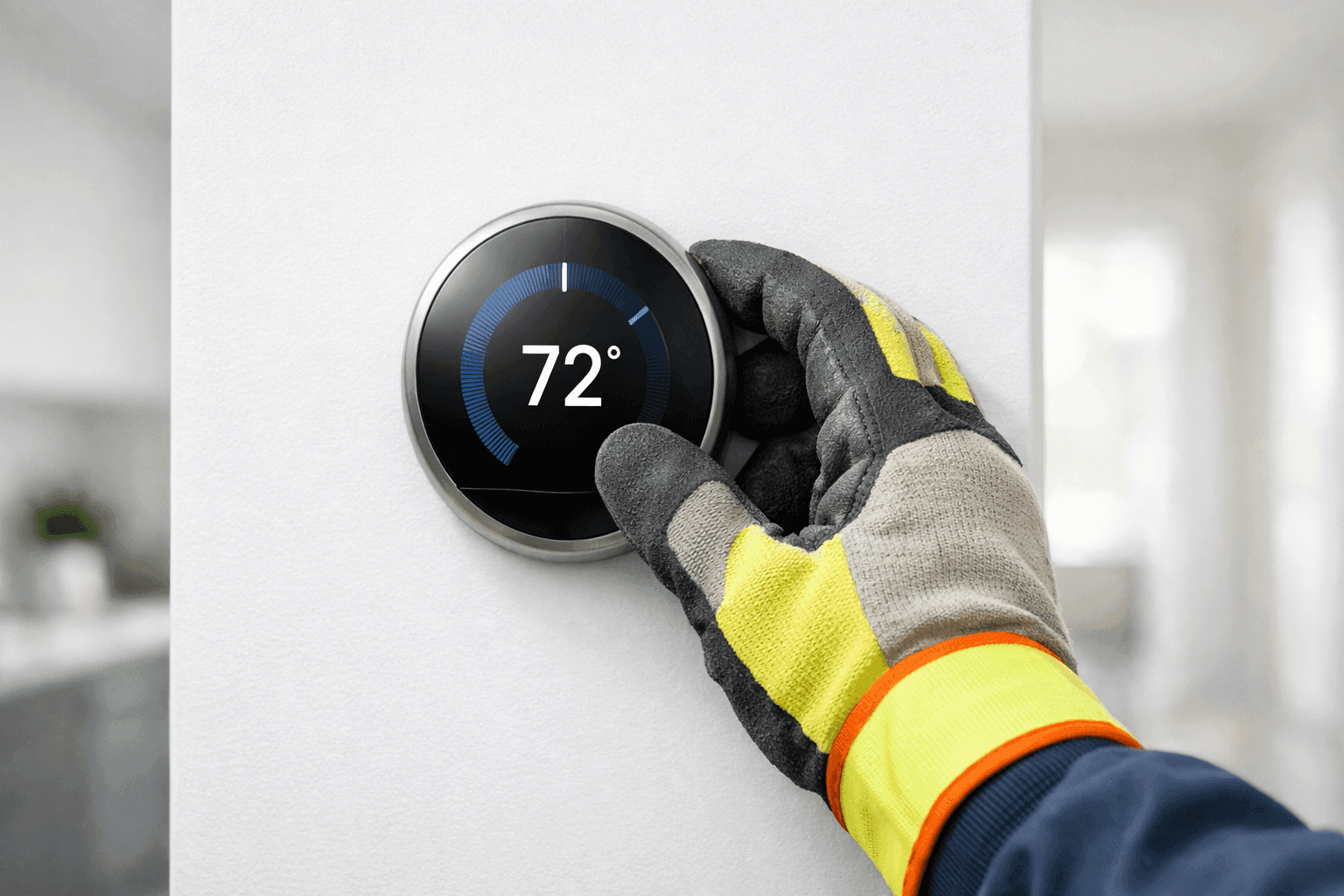
Sometimes, the smallest device on your wall has the biggest impact on your comfort. Choosing the right thermostat isn’t just about temperature—it's about control, savings, and peace of mind.
At Right On AC, we know the world of cooling and indoor air quality can feel overwhelming. With so many thermostat types and features, how do you pick what fits your space best? Let’s break it down together.
Types of Thermostats (Manual, Programmable, Smart) 🕹️
Thermostats come in three main styles. Each one fits a different lifestyle, budget, and level of tech-savvy.
Manual Thermostats
Think of these as the classic car of temperature control—reliable, straightforward, and no frills.
Pros:
- Simple to use—just turn the dial or move the lever.
- Lower upfront cost.
- Fewer parts to break.
Cons:
- No scheduling options.
- Must adjust by hand every time.
- Not energy efficient—often leads to wasted cooling or heating.
Best for: Spaces with stable occupancy, like workshops or storage rooms.
Programmable Thermostats
A programmable thermostat is like setting your coffee maker to brew before sunrise. You create a schedule, and it handles the rest.
Pros:
- Set daily or weekly temperature schedules.
- Save money by reducing cooling when you’re away.
- Some models offer vacation modes.
Cons:
- Learning curve for setup.
- Batteries may need replacement.
- Less flexibility than smart options.
Best for: Busy homes, offices, or anyone with a predictable routine.
Smart Thermostats
Welcome to the future. Smart thermostats connect to Wi-Fi and learn your habits, adjusting automatically for comfort and savings.
Pros:
- Remote control via smartphone or voice assistant.
- Energy reports to track savings.
- Some models use sensors to learn your schedule and adjust on their own.
Cons:
- Highest upfront investment.
- May require a “C-wire” or extra wiring.
- Needs an internet connection for full features.
Best for: Tech-loving families, businesses, vacation homes, or anyone seeking maximum control.
Key Features to Consider
Not all thermostats are created equal. Consider what matters most for your space and lifestyle.
- Ease of Use: Touchscreens, simple menus, or large displays can make daily use a breeze.
- Scheduling: Do you want daily, weekly, or even hourly programs? Think about your routine.
- Remote Access: Need to adjust cooling while away? Smart thermostats offer mobile apps.
- Learning Abilities: Some smart models adapt to your preferences automatically.
- Alerts & Reminders: Helpful for filter changes, maintenance, or extreme temperature warnings.
- Energy Tracking: Insight into usage means you can spot savings opportunities.
- Zoning Capabilities: Useful for larger homes or commercial spaces with different temperature zones.
Tip: Look for ENERGY STAR® certification. According to the U.S. Department of Energy, ENERGY STAR thermostats can help save up to 8% on annual heating and cooling bills.
Compatibility with HVAC Systems
The best thermostat in the world is useless if it doesn’t work with your system.
- System Type: Check if your space uses central air, a heat pump, mini-splits, or a furnace. Some thermostats only work with specific systems.
- Voltage: Most residential thermostats are 24V, but some older or commercial systems use line voltage (120V or 240V).
- Wiring: Some smart thermostats need a common wire (“C-wire”) for power. If you’re unsure, snap a photo of your current wiring before shopping.
- Multi-Stage Systems: If your HVAC system runs at more than one speed, make sure the thermostat supports this feature.
- Accessories: Do you have whole-house fans, humidifiers, or dehumidifiers? Some thermostats can control these, too.
If you’re planning a new HVAC Installation, it’s the perfect time to upgrade your thermostat for maximum comfort and control.
Installation Tips: DIY or Call a Pro?
Swapping out a manual thermostat for a programmable one can be as simple as changing a light switch. But with smart models and advanced features, things get trickier.
When DIY Works
- You’re replacing a similar, compatible model.
- Wiring matches up (take a picture before disconnecting anything).
- You understand how to shut off power at the breaker.
When to Call a Pro
- Unfamiliar wiring, or no “C-wire” present.
- Upgrading to a smart thermostat from an old system.
- Multi-zone or commercial systems.
- Involving accessories like humidifiers, dehumidifiers, or whole-house fans.
Safety first: Always turn off power to the HVAC system at the breaker before starting. If you’re unsure, don’t risk it—call Right On AC for help.
For commercial spaces, code compliance is critical. Refer to the National Electrical Code (NEC) and local ordinances for correct installation and wiring. Manufacturer certifications (like UL or CSA) ensure your thermostat meets safety and performance standards.
Quick Safety Checklist
- Power off your HVAC system at the breaker.
- Confirm voltage and wiring compatibility.
- Follow manufacturer instructions step by step.
- Secure all wires, and keep them labeled.
- Double-check all connections before powering back on.
Common Mistakes to Avoid
- Skipping the wiring check—mismatched wires can damage your HVAC.
- Overlooking compatibility with heat pumps or multi-stage systems.
- Forgetting to set your schedule after installation.
- Not registering smart thermostats for warranty or updates.
FAQ: Thermostats and Cooling
How do I know if my current thermostat works with my new HVAC system?
Check the labels on your current thermostat and your new system’s manual. If in doubt, contact Right On AC.
Will a smart thermostat really save me money?
According to ENERGY STAR and the EPA, smart thermostats can significantly reduce energy bills—sometimes by hundreds per year.
Can I control my thermostat from my phone?
If you choose a smart thermostat with Wi-Fi, absolutely.
Prevention & Maintenance
- Change batteries regularly (if applicable).
- Dust the thermostat face—grime can impact readings.
- Update software on smart models to ensure security and new features.
- Pair with routine HVAC Maintenance for peak performance.
Seasonal Considerations
- Update schedules in spring and fall when daylight savings time changes.
- For snowbirds or vacation rentals, use vacation or away modes for extra savings.
- Monitor indoor air quality—pairing a smart thermostat with other IAQ solutions keeps your air fresh year-round.
Signs of Trouble
- Random temperature swings.
- Unresponsive controls or blank screens.
- System short cycling (turning on and off rapidly).
- Unexpected energy spikes on bills.
If you spot these, it’s time for a checkup.
Timeline & Disruption
Most thermostat swaps take less than an hour. But if wiring or compatibility issues pop up, expect a longer visit. For businesses, scheduling during off-hours can minimize disruption.
Materials & Equipment
- Screwdriver set (flat and Phillips head)
- Wire labels or tape
- Smartphone or camera (for wiring photos)
- Manufacturer instructions
- Voltage tester (for safety)
- Batteries (if needed)
When It's an Emergency
If your cooling system won’t turn on, or you experience unsafe temperature swings, call for 24-hour emergency service. Right On AC is here when you need us most.
The Right Thermostat is the Heartbeat of Your Comfort
Choosing the right thermostat is about more than convenience—it’s about creating a comfortable, energy-efficient space that fits your life or business. Whether you're upgrading a single-family home or managing a large building, there's a solution that matches your needs and your existing equipment.
If you’re searching for the right Thermostats in Coral Gables, or want a cooling company that puts your comfort first, you’re already in the right place.
Call Right On AC now — or reach us anytime at 888-836-1269 .