How Often Should You Replace HVAC Filters?
Breathe easy. That’s not just a catchy phrase—it’s a promise your HVAC system makes every time you fire up the cooling or heat. But here’s a secret many folks miss: your system’s filter is the silent sentinel, guarding your air and keeping things running smooth. Ignore it, and you’ll pay the price in dust, allergies, high power bills, and even breakdowns.
At Right On AC, we see it all. Clogged filters that choke your system. Homes with mysterious odors. Offices where energy bills keep creeping up. The fix is often simple—replace the filter. But how often should you really do it? Let’s get into the nitty-gritty so you never let a $10 filter turn into a $1,000 repair.
Why Filter Changes Matter 🛡️
Think of your HVAC filter like a coffee strainer. When it’s clean, everything flows through easily. When it’s clogged, things back up—brewing bitterness in more ways than one.
- Efficiency Drops: A dirty filter makes your blower work harder, like running in wet sand. This means more energy use and higher bills.
- Air Quality Suffers: Dust, pollen, and pet dander sneak past old filters, swirling back into your living or work space.
- System Wear: Blocked filters force your system to overheat and strain, risking expensive breakdowns.
- Health Risks: Mold and bacteria can multiply in dirty filters, making allergies and asthma worse.
The U.S. Department of Energy warns that a clogged filter is one of the top reasons for cooling system failures. That’s a headache nobody needs.
Signs It’s Time to Replace Your HVAC Filter
Wondering if your filter is overdue for a swap? Here’s what to look for:
- Visible Dirt: If the filter looks gray or packed with dust, swap it out.
- Worsening Allergies: Sneezing more lately? That’s a red flag.
- Musty Odors: Smells coming from vents can mean trapped contaminants.
- Uneven Cooling: Some rooms too hot, others too cold? Airflow may be blocked.
- Higher Bills: A spike in your energy bill could mean your system is struggling.
Don’t wait for all these signs. By then, you’re already losing comfort and efficiency.
Filter Change Schedules: Residential vs. Commercial
There’s no one-size-fits-all answer. But here’s a practical guide:
For Homes
- Standard 1-inch filters: Change every 30-60 days.
- Pets or allergies: Every 20-45 days.
- Vacation homes: Every 3-6 months (less frequent use).
For Commercial Spaces
- High-traffic offices or clinics: Every 1-2 months.
- Restaurants, salons, or gyms: Every 2-4 weeks.
- Light-use retail or storage: Every 2-3 months.
Busy environments collect dust and particulates faster. If your space sees a lot of foot traffic, bump up the frequency.
For local guidance on filter schedules or HVAC Maintenance specific to your area and needs, Right On AC is always here.
Types of HVAC Filters: What’s Right for You?
Choosing the right filter isn’t just about size. It’s about matching your needs with your system’s capabilities.
- Fiberglass (disposable): Cheap, basic, last up to 30 days. Good for basic dust, not much more.
- Pleated (disposable): Better at capturing small particles. Last 60-90 days.
- Electrostatic: Use static electricity to trap particles. Can be disposable or washable.
- HEPA: Removes up to 99.97% of airborne particles, but not all HVAC systems can handle them.
- Washable: Reusable, but require regular cleaning and drying.
Check your system’s manual or ask a pro if you’re unsure. Using a filter that’s too restrictive can hurt airflow and efficiency.
How to Replace Your HVAC Filter
Swapping a filter is simple—but a few details matter.
- Turn off your system for safety.
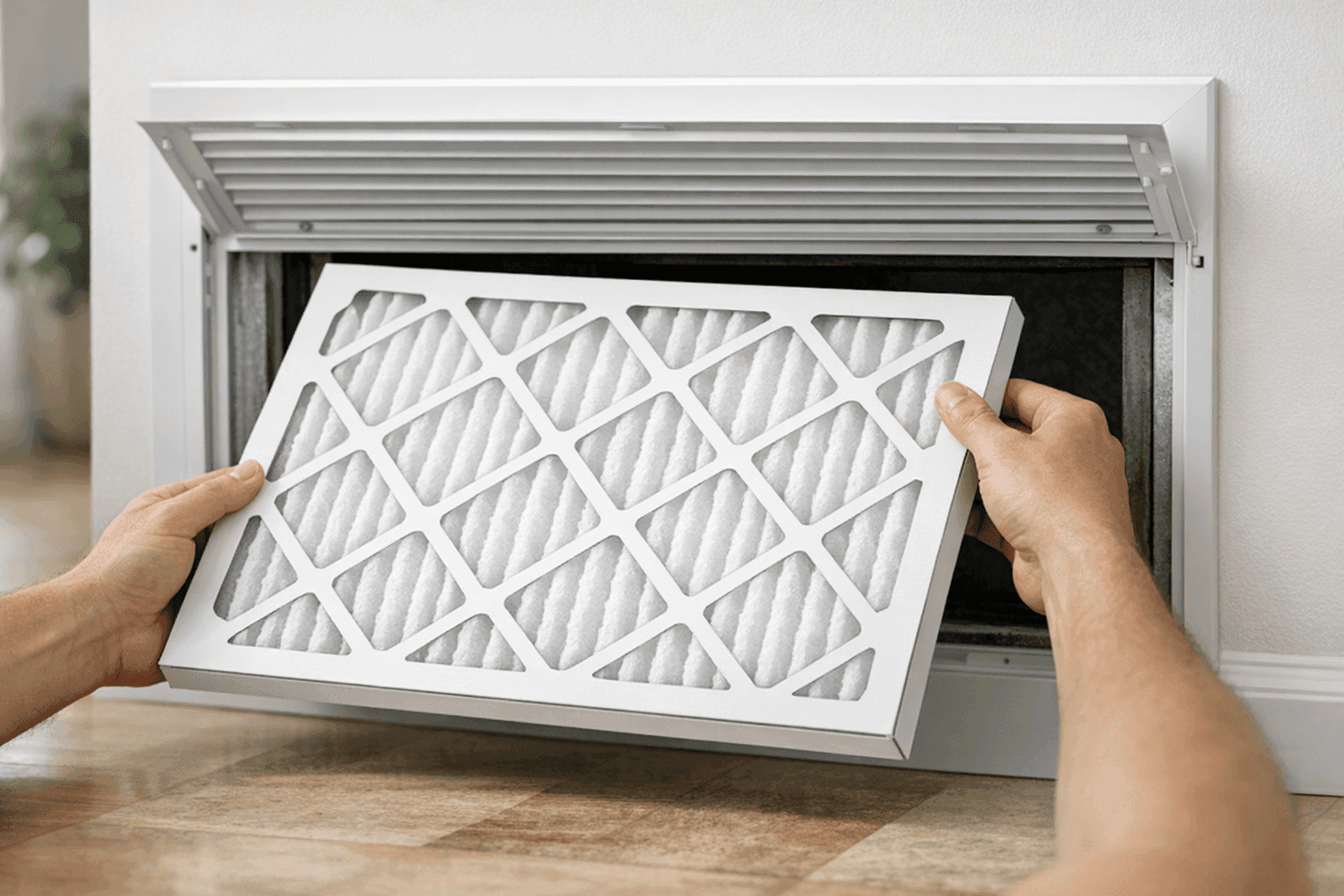
- Locate filter slot (usually behind a return vent or inside the blower compartment).
- Slide out old filter and note the size printed on its frame.
- Insert new filter with arrows pointing toward the blower.
- Secure the cover and turn your system back on.
Tip: Set a recurring reminder on your phone or calendar. Many people forget until problems pop up.
Common Mistakes to Avoid ⚠️
It’s easy to get filter changes wrong. Here’s what to watch for:
- Wrong Size: Even a half-inch gap lets dust sneak by.
- Skipping Changes: “Out of sight, out of mind” leads to big repairs.
- Installing Backwards: Filters have arrows for a reason.
- Overly Restrictive Filters: High MERV ratings can actually choke airflow in some systems.
- Forgetting Multiple Filters: Homes with return vents in several rooms may have more than one filter.
A little attention now prevents headaches later.
Quick Safety Checklist
Before you change any filter, double-check:
- The system is powered off.
- You have the right replacement (size and type).
- Filters are installed with proper airflow direction.
- No exposed wiring or moisture around the filter slot.
If you spot damage or unusual wiring, leave it to the pros.
DIY vs. Call a Pro
Most homeowners and business managers can handle standard filter swaps. But call a professional if:
- You have trouble accessing the filter slot.
- Your system uses specialty or media filters.
- You notice mold, water damage, or wiring issues.
- Regular filter changes don’t solve dust or allergy issues.
HVAC technicians also inspect for hidden problems—like duct leaks—that filters alone can’t fix.
What Pros Do On Arrival
When Right On AC arrives for filters or hvac-maintenance, we:
- Inspect filter type and fit.
- Check for airflow restrictions.
- Test system operation before and after the swap.
- Give advice on the best schedule for your home or building.
- Look for signs of deeper issues—like duct leaks or moisture.
This thoroughness is why regular professional maintenance pays off.
Prevention & Maintenance: The Key to Long Life
Changing your HVAC filter is like brushing your teeth—it’s a tiny task that prevents big problems. Pair regular filter swaps with seasonal system checkups, duct cleaning, and periodic home energy audits to keep your air clean and your bills low.
Annual maintenance helps catch issues that filters alone can’t fix, like refrigerant leaks, worn belts, or dirty coils.
Costs & Time Factors
HVAC filters are affordable—usually $5 to $30 per filter depending on type and size. Specialized or HEPA filters cost more.
The swap itself takes less than five minutes, but the payoff is months of cleaner air and smoother cooling. Compared to the average $300+ repair for a frozen coil or blower issue, it’s a bargain.
When It’s an Emergency
If your system stops cooling suddenly, check your filter first. A totally clogged filter can cause your unit to overheat and shut down as a safety measure. Replace the filter, reset your system, and see if normal operation resumes. If not, it’s time to call Right On AC’s 24-hour emergency service.
FAQ: Filter Questions We Hear Most
How do I know my filter’s size?
Check the old filter’s frame—dimensions are printed on the edge. Bring it to your hardware store if you’re unsure.
Can I use a HEPA filter in my system?
Only if your unit is designed for high-resistance filters. Ask your HVAC pro or check the manual.
Are washable filters worth it?
They can be, but require regular cleaning and dry time. If you forget, you’ll risk mold growth.
What if my filter gets dirty before the schedule?
Replace it early. High dust, pets, or nearby construction can accelerate clogging.
Seasonal Considerations
Spring and fall are prime times for filter changes. Pollen, dust, and temperature swings put extra strain on your system. Before firing up your AC or furnace for the season, check (and likely change) your filter.
Timeline & Disruption
For most homes and offices, a filter change is a five-minute task with zero disruption. For larger commercial systems with built-in media racks, it can take a bit longer—but regular swaps can be scheduled off-hours to minimize disruption.
Materials & Equipment Needed
- Correct size replacement filter(s)
- Flashlight (for dark filter slots)
- Screwdriver (sometimes needed to open access panels)
- Gloves (optional if you’re sensitive to dust)
That’s it. No fancy tools. No excuses.
Choosing the Right Filter: Pro Tips
- For allergies, opt for pleated filters with a MERV 8–13 rating.
- For basic dust, a fiberglass filter changed monthly may suffice.
- Don’t “overfilter”—your system needs to breathe.
- Buy filters in bulk to save money and ensure you always have a spare.
The right filter keeps your air fresh, your cooling system humming, and your family or team healthy.
A simple filter change is the cheapest insurance for your HVAC system. If you can’t remember when you swapped yours last, it’s probably time—don’t wait for trouble. Call Right On AC now — or reach us anytime at 888-836-1269 .