How to Prevent Frozen Pipes During Cold Snaps
When the mercury plummets, there’s more at risk than a chilly living room. Frozen pipes can turn a cozy home—or a busy office—into a scene of major water damage. At Right On AC, we know a cold snap can sneak up on anyone, sending homeowners and businesses scrambling for solutions.
But here’s the good news: with a little planning and a watchful eye, you can keep your pipes—and your peace of mind—safe all winter long.
Why Pipes Freeze in HVAC
Let’s face it—pipes don’t freeze because they want to ruin your week. They freeze when water inside them gets cold enough to turn solid. This usually happens when outside temperatures drop below 20°F (-6°C), but factors inside your building matter too.
Poor insulation, drafty crawlspaces, and HVAC issues can turn a pipe into an ice pop. It’s not just about the air outside—it’s about how well your cooling and heating systems keep the building interior protected. Pipes near exterior walls, attics, and basements are most vulnerable.
Even a minor gap or a forgotten vent can create a hidden cold zone. According to the International Code Council, proper insulation and ventilation are critical in both residential and commercial builds.
Prevention Tips—Insulation, Maintenance, and More 🧤
Stopping frozen pipes starts with a few key steps. Think of it as putting a winter coat on your plumbing.
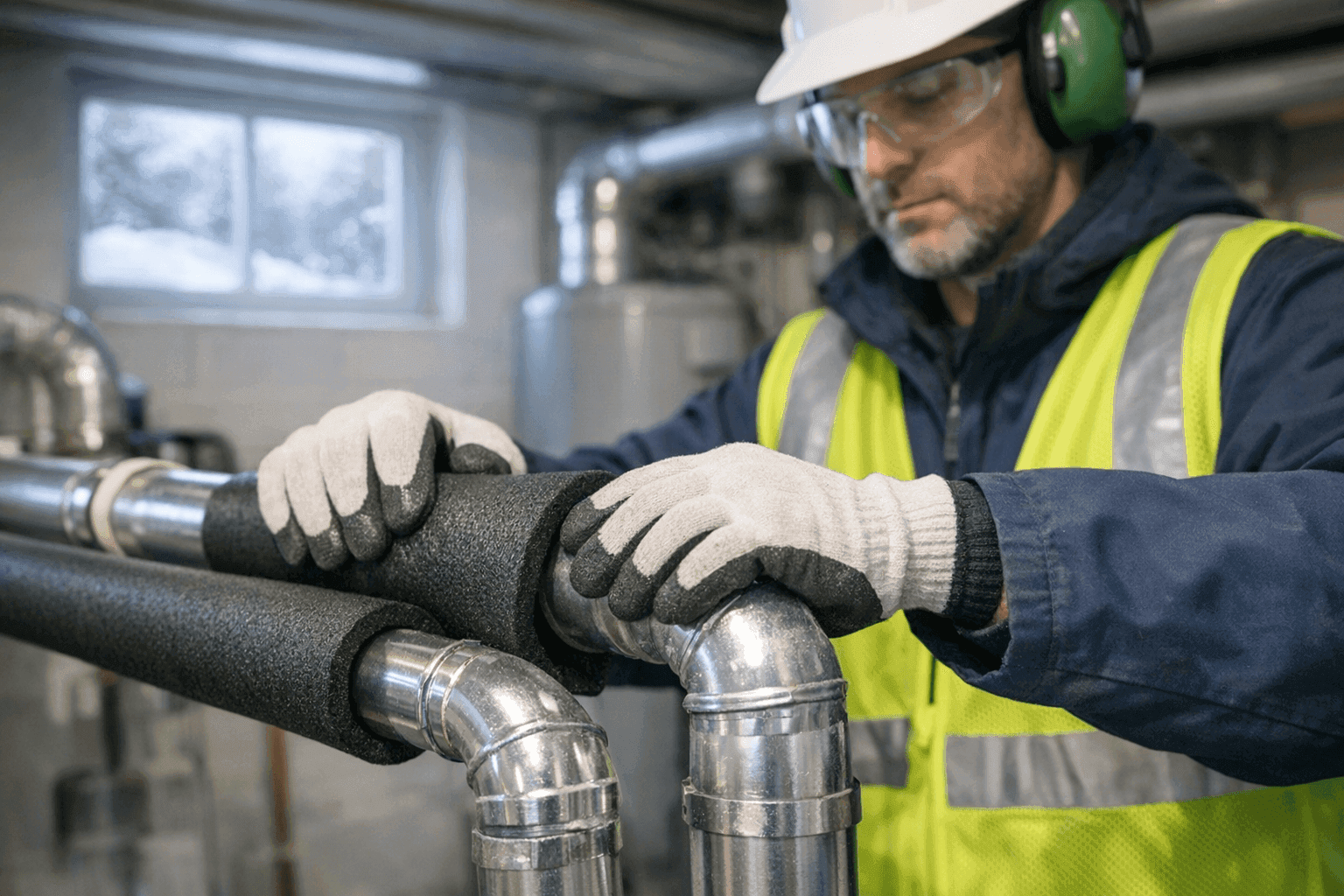
- Insulate exposed pipes in attics, basements, and crawlspaces with foam sleeves or fiberglass wrap. Don’t forget pipes under sinks and near exterior walls.
- Seal gaps and cracks in walls, windows, and foundations. Cold air sneaking in can chill pipes fast.
- Keep the heat on. Even if you’re away, set your thermostat no lower than 55°F. Smart thermostats (installed by pros like us) can help monitor temps remotely.
- Open cabinet doors under sinks to let warm air circulate around the plumbing.
- Let faucets drip slightly during extreme cold. Moving water is less likely to freeze.
- Schedule regular HVAC maintenance to ensure your system runs efficiently and evenly heats your space. Learn more about HVAC Maintenance.
For businesses, consider a home energy audit to spot hidden trouble zones. And ask about whole-house fans or ventilation improvements if your building struggles with temperature swings.
DIY vs. Call a Pro
Some prevention steps are DIY-friendly. Insulating pipes, sealing cracks, and opening cabinets are simple enough for most people.
But if you notice persistent cold zones, uneven heating, or suspect your HVAC system is underperforming, it’s time to call for help. Professional technicians can run diagnostics, recommend upgrades, and catch problems before they turn into emergencies.
If you’re worried about the unexpected, our 24 Hour Emergency Service means you’re never alone when cold weather strikes.
Quick Safety Checklist
- Insulate pipes in unheated areas.
- Seal exterior gaps and cracks.
- Maintain a steady indoor temperature.
- Check HVAC filters and airflow.
- Have emergency contacts ready—just in case.
Signs of Trouble 🚨
How do you know if your pipes are in danger? Watch for these red flags:
- Frost on pipes: If you see white, icy patches, act fast.
- Reduced water flow: A slow trickle may signal a blockage forming.
- Strange odors: Funky smells from drains or faucets could mean a pipe is partially frozen and water is backing up.
- Unusual noises: Banging, clanking, or gurgling can indicate ice pressure in the line.
If you spot any of these, don’t wait—take action immediately.
What to Do If Pipes Freeze
Sometimes, despite your best efforts, a pipe freezes. Here’s what to do next:
- Turn off the main water supply to prevent flooding if the pipe bursts.
- Open faucets to relieve pressure and allow any water to escape as the ice melts.
- Warm the pipe gently with a hair dryer, heating pad, or warm towels. Never use open flames or blowtorches.
- Check for leaks as the pipe thaws. If you find a crack or water begins to spray, shut off the water and call for professional help.
Remember: a frozen pipe is an urgent issue, but with prompt attention, you can minimize the damage.
What HVAC Pros Do On Arrival
When Right On AC responds to a frozen pipe call, here’s what happens:
- We assess the affected area and shut off water if needed.
- Specialized thawing equipment is used to safely warm pipes.
- We inspect for cracks, leaks, and hidden damage.
- If repairs are needed, we’ll explain your options clearly.
- We’ll also check your cooling and heating systems for issues that may have contributed to the freeze.
Costs & Time Factors
The cost of prevention is almost always less than the price of repair. Insulating pipes or sealing drafts is a quick, affordable job. But a burst pipe can mean hundreds—or even thousands—of dollars in cleanup, plumbing, and possible HVAC repairs.
Most prevention steps take a few hours at most. Emergency repairs? Those can take all day, plus follow-up visits.
When It’s an Emergency
If water is spraying, flooding, or causing sparks, it’s an emergency. Shut off your main water and call for professional help immediately.
For less urgent freezes—like a slow faucet or a single icy pipe—you may be able to thaw things out yourself. But if you’re unsure, it’s safer to call.
You can always reach our team for 24 Hour Emergency Service if you’re in the Grand Island area for cooling.
FAQ: Frozen Pipes and HVAC
Will my insurance cover frozen pipe damage? Check your policy. Most homeowner and commercial policies include some coverage for water damage related to burst pipes, but exclusions may apply.
Can I use space heaters to warm pipes? Use extreme caution. Space heaters pose fire risks, especially near flammable materials. Never leave them unattended.
How often should I check my HVAC system in winter? At least once per season, or any time you notice uneven heating or cold spots. Regular maintenance can prevent surprises.
Seasonal Considerations
Cold snaps don’t always give warning. Weather can shift fast. Make pipe inspection and HVAC maintenance a routine part of your fall and winter checklist. Early attention saves headaches (and dollars) later.
Common Mistakes to Avoid ❌
- Waiting until the first freeze to check pipes.
- Ignoring pipes in garages, crawlspaces, or unheated add-ons.
- Turning off the heat completely when away.
- Using open flames to thaw pipes—this is a major fire hazard.
Timeline & Disruption
A well-prepared home or business can weather a cold snap with zero disruption. Prevention takes a few hours. Repairs? They can leave you without water—or even heating and cooling—for days.
Materials & Equipment: What You’ll Need
- Foam pipe sleeves or fiberglass wrap.
- Silicone caulk or spray foam for sealing gaps.
- A reliable thermostat—consider upgrading to a smart model.
- Access to your main water shutoff.
- Basic heating equipment (hair dryer, warm towels) for emergencies.
Who Needs to Worry Most?
Anyone with:
- Older homes or commercial buildings.
- Poorly insulated attics or basements.
- HVAC systems overdue for maintenance.
- Pipes running along exterior walls or unheated spaces.
If that sounds like your property, don’t wait until the next cold snap.
Build Your Cold Weather Plan Today
Frozen pipes don’t care if your building is big or small, new or old. But with smart prevention and a little vigilance, you can keep the water flowing and your property protected—no matter how low the temperature goes.
Have questions? Need help winterizing or tackling a frozen pipe right now?
Call Right On AC now — or reach us anytime at 888-836-1269 .