How to Reduce HVAC Noise in Commercial Spaces
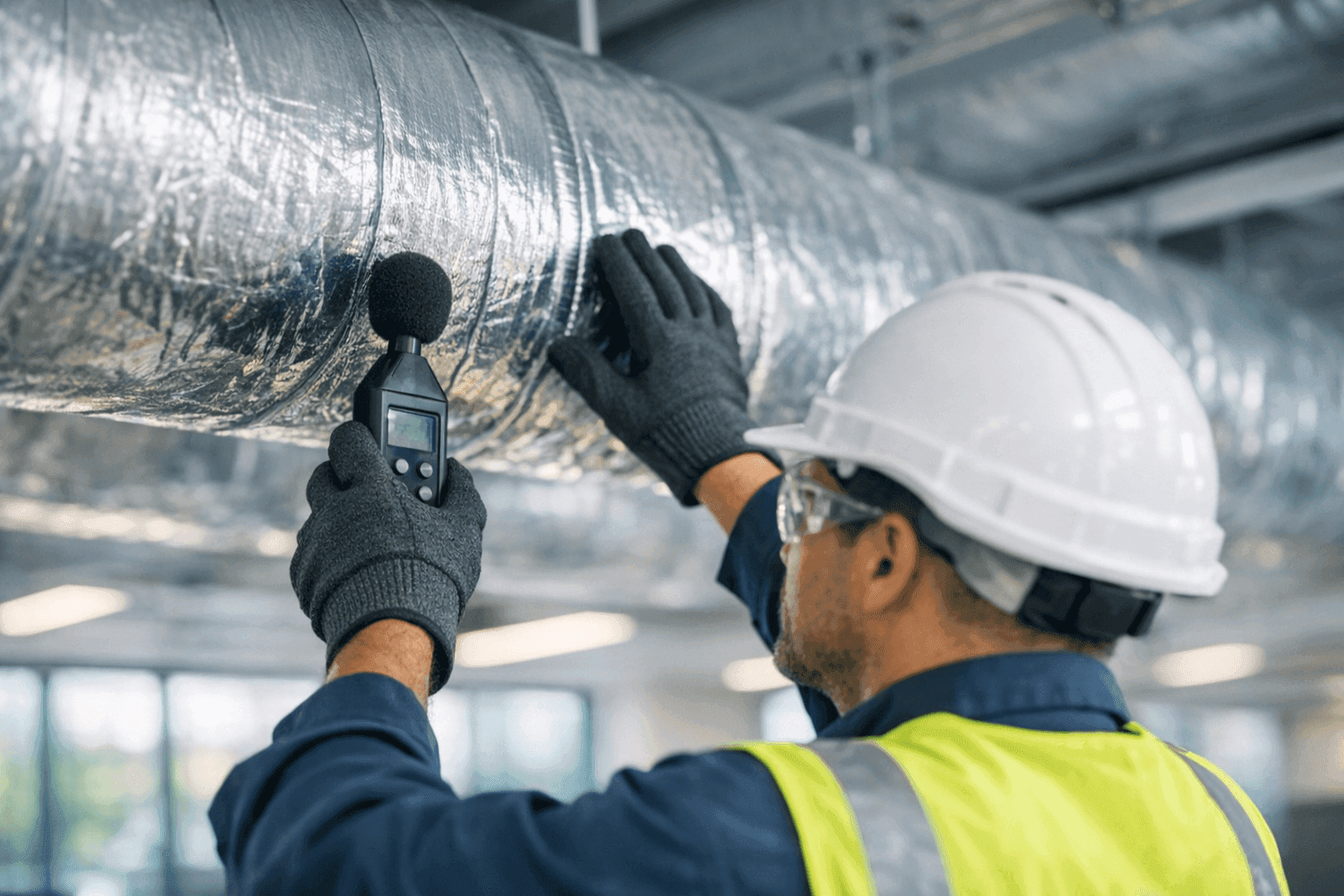
When you walk into a busy office, restaurant, or retail space, you expect a hum of activity—not a thunderous roar from above. But too often, commercial HVAC systems drown out conversations, distract employees, and leave managers scrambling to restore peace.
At Right On AC, we know a comfortable, quiet workspace isn’t a luxury—it’s the foundation for productivity and good business. If HVAC noise is echoing through your building, it’s time to take control.
Common Sources of Commercial HVAC Noise
You hear it: rattles, thumps, whistles, maybe even the whoosh of air like a windstorm in a tunnel. Commercial cooling systems are powerful, but they don’t have to be loud. Here’s what typically causes all that racket:
- Loose or vibrating ductwork: Metal ducts can act like a drum, amplifying every shake.
- Airflow turbulence: High-speed air hitting sharp turns or bends.
- Worn bearings or motors: Like the squeaky wheel on a shopping cart, these parts get louder as they age.
- Improperly sized equipment: A system too large or small for your space works harder, making more noise.
- Dirty filters or blocked vents: Obstructions force air to squeeze past, creating whistling or hissing.
The source isn’t always obvious—sometimes it’s a combination. That’s why a thorough inspection matters.
Quick Safety Checklist Before Investigating
Safety first, always. Before you (or anyone) gets hands-on:
- Turn off the HVAC system at the thermostat.
- Don’t touch exposed wiring.
- Use a sturdy ladder for ceiling vents.
- Wear hearing protection if the noise is extreme.
- If you smell burning or see sparks, call emergency services.
Noise is annoying, but safety is paramount.
Solutions—Duct Lining, Baffles, Vibration Control 🛠️
Let’s quiet things down. There are proven methods to hush an unruly HVAC system:
Duct Lining
Adding insulation inside ducts works like a thick blanket in a noisy room. It absorbs sound waves so they don’t bounce around. Bonus: It can also boost energy efficiency by reducing heat loss.
Sound Baffles
Baffles are barriers placed within ducts or around noisy components. Picture speed bumps for sound—forcing noise to zigzag, losing energy with every turn.
Vibration Isolators
Rubber mounts and flexible connectors stop vibrations from traveling through metal framing into offices and meeting rooms. If your HVAC sounds like a marching band, these may be missing or worn out.
Regular Duct Cleaning
Dust and debris not only reduce indoor air quality—they can also cause pressure imbalances and airflow whistling. Routine Duct Cleaning helps keep things smooth and quiet.
What Pros Do On Arrival
When you call in a Right On AC technician, here’s what to expect:
- Careful listening: We’ll walk your space, pinpointing noise hotspots.
- Inspection: Checking for loose panels, worn belts, or rattling fasteners.
- Airflow testing: Ensuring vents and returns aren’t blocked.
- Equipment checks: Motors, bearings, and fans get a health check.
- A clear action plan: We’ll explain what needs fixing—no jargon, just straight talk.
Signs You Need Professional Help
Not all HVAC noise means disaster. But certain sounds spell trouble:
- Grinding or screeching: Could signal failing bearings or motor parts.
- Sudden, loud bangs: Often a sign of duct collapse or pressure imbalance.
- Persistent rattling: May mean something’s come loose inside the system.
- Noise alongside a drop in airflow or cooling: Time to call for HVAC Repair.
If you catch these early, you can avoid expensive downtime.
DIY vs. Call a Pro
Some fixes are simple. Tightening a loose vent cover or replacing a clogged filter? Most facility managers can handle that.
But if the noise is deep inside the ductwork, involves electrical components, or keeps coming back after DIY fixes, it’s best to call a licensed professional. They have the tools—and experience—to solve the root problem, not just the symptoms.
Prevention & Maintenance Tips
Keeping your commercial HVAC quiet isn’t a one-time project. It’s an ongoing habit:
- Schedule regular inspections—at least twice a year.
- Replace air filters monthly during peak seasons.
- Check for loose screws and duct connections.
- Keep supply and return vents clear of furniture or equipment.
- Invest in annual HVAC Maintenance to catch issues early.
These small steps pay off in the long run—less noise, fewer repairs, and lower energy bills.
Costs & Time Considerations
How much will it cost—and how long will it take? That depends on the fix:
- Simple repairs (tightening, filter changes): Minimal cost, 30–60 minutes.
- Duct lining or sound baffle installation: Moderate investment, usually completed in one business day.
- Major repairs (motor replacement, extensive ductwork): Higher cost, may require scheduling during off-hours.
Right On AC works with your schedule to minimize disruption. Many projects can be completed after hours or on weekends for businesses that can’t afford downtime.
When It’s an Emergency 🚨
HVAC noise becomes an emergency if:
- It’s accompanied by burning smells or electrical arcing.
- There’s a sudden, sharp drop in cooling performance.
- The noise is so loud it disrupts business operations.
If you’re unsure, err on the side of caution and call for emergency service. Our team offers 24-hour emergency support—your comfort and safety come first.
Seasonal Considerations
HVAC noise can spike during seasonal transitions—especially when switching from heating to cooling. Expansion and contraction in ducts, frozen coils, or sudden start-up surges all play a role.
Plan for a pre-season checkup each spring and fall. It’s easier to fix minor issues before they become major headaches.
Common Mistakes to Avoid
Don’t let quick fixes make things worse:
- Using foam or tape to muffle noise—these can block airflow and create fire hazards.
- Ignoring persistent noise—it rarely gets better on its own.
- Overlooking professional duct cleaning—dust and debris buildup is a common culprit.
Stick with proven solutions and don’t cut corners.
Timeline & Disruption: What to Expect
Most noise-reduction projects can be done with minimal impact to your business. Our technicians work efficiently and cleanly, keeping disruption to a minimum. For larger projects, we’ll coordinate with your team to schedule off-peak hours whenever possible.
FAQ: Your HVAC Noise Questions Answered
Q: How loud should a commercial HVAC system be?
A: Most systems should produce a low hum, not a roar. If you’re raising your voice to be heard, it’s too loud.
Q: Can HVAC noise affect productivity?
A: Absolutely. Studies from the EPA and OSHA show that excessive noise leads to stress, distraction, and lower job satisfaction.
Q: Is HVAC noise ever a sign of a safety issue?
A: Sometimes. Grinding, squealing, or sudden bangs can be red flags. When in doubt, get it checked by a professional.
The Role of Building Codes and Standards
Building codes, such as those set by ASHRAE (American Society of Heating, Refrigerating and Air-Conditioning Engineers), outline acceptable noise levels for commercial HVAC systems. Staying compliant isn’t just about comfort—it’s about meeting legal and industry standards.
The Right Partner for Quiet, Productive Spaces
Reducing HVAC noise takes know-how, the right tools, and a partner who puts your comfort first. Whether it’s Duct Cleaning or a full system overhaul, Right On AC is here to help.
Ready to reclaim the peace and quiet your business deserves?
Call Right On AC now — or reach us anytime at 888-836-1269 .