How to Safely Use Your Whole-House Fan at Night
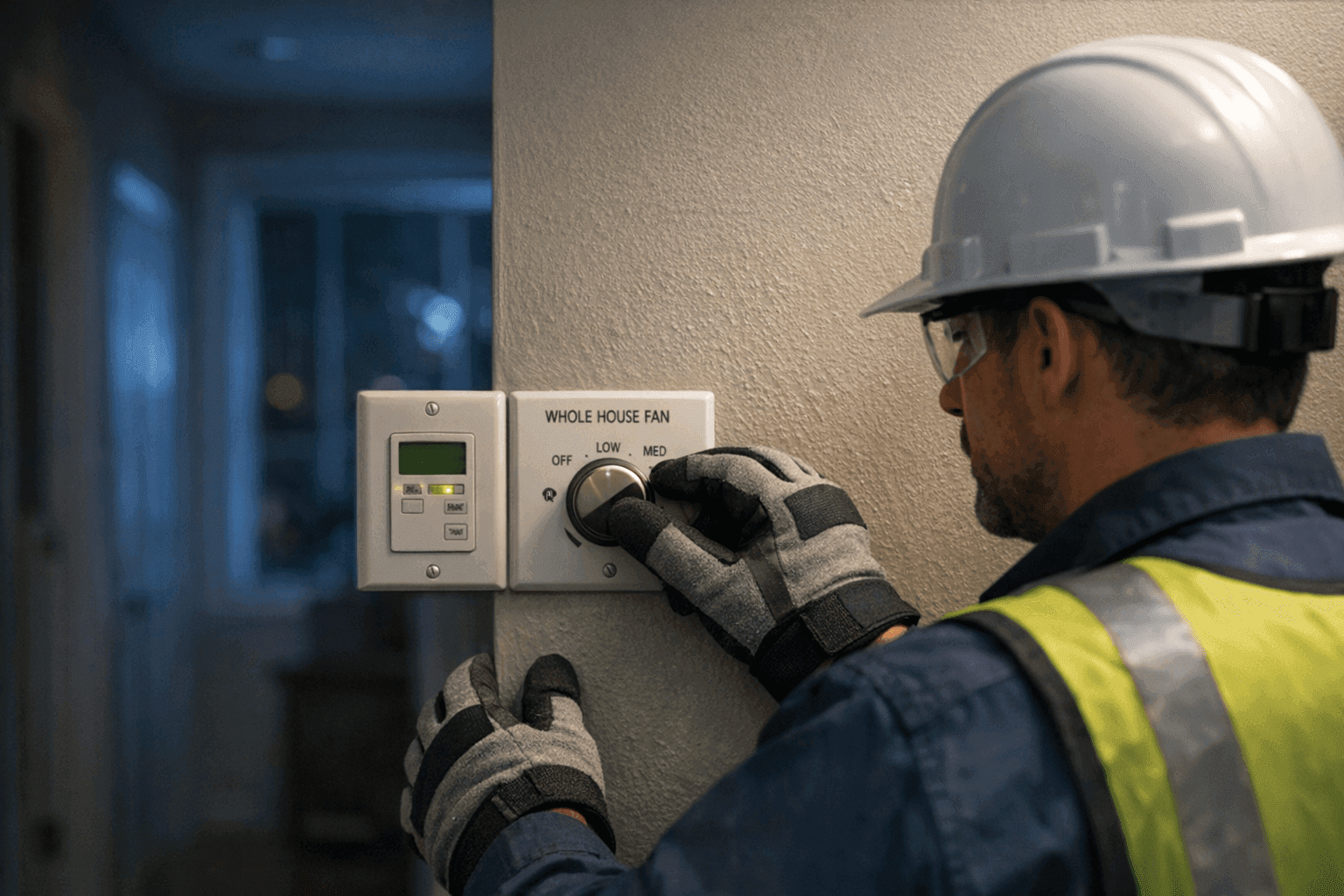
Stuffy rooms. Heavy air that lingers long after sunset. It’s a struggle that every homeowner and business manager knows, especially during those relentless warm nights. At Right On AC, we understand the urge to flip on your whole-house fan and let in the cool, refreshing night air. But comfort should never come at the expense of safety.
In this guide, you’ll learn how to safely use your whole-house fan at night—making the most of your investment and breathing easier, literally and figuratively.
Why Use Fans at Night? 🌙
The night offers nature’s own cooling system. Temperatures drop. Breezes pick up. Using a whole-house fan pulls this cooler air into your space, flushing out stale, warm air and lowering the temperature inside.
But it’s more than just comfort. Properly used, a whole-house fan can:
- Improve indoor air quality by removing pollutants trapped during the day.
- Lower your energy bills by reducing the need for air conditioning.
- Help your home or business “reset” for the next hot day.
According to the U.S. Department of Energy, using cooling strategies like whole-house fans can cut energy use and costs significantly—especially when used at night.
Nighttime Safety Considerations
Nighttime brings its own set of considerations. Unlike the day, doors and windows are often locked tight for security. Here’s how to stay safe:
- Lock unused entrances: Only open windows in rooms you’re occupying.
- Check window screens: Intact screens keep out bugs and critters.
- Watch for carbon monoxide: Never run gas appliances (like a generator) at the same time as your fan. This can pull dangerous fumes indoors. The CDC warns about this risk—always ventilate safely.
- Secure attic access: Whole-house fans move a lot of air. Make sure attic doors and hatches are securely closed to prevent accidents.
A quick nightly check can go a long way toward peace of mind.
Best Settings for Comfort
Think of your whole-house fan as a volume knob for fresh air. Here’s how to tune it:
- Open a few windows: Crack open windows farthest from the fan, about 2–3 inches. This creates a gentle cross-breeze.
- Start on low: Let your fan “ease into” the night. High speed isn’t always best.
- Monitor humidity: Too much outside humidity? Your fan may make things muggy. Use a Dehumidifiers if needed.
- Set a timer: Many fans have programmable timers. Let the fan run for an hour or two, then shut off—so you don’t wake up chilly.
Experiment to find your sweet spot. The goal: cool, comfortable, and quiet sleep.
Quick Safety Checklist ✅
Before you hit the switch tonight, run through this:
- Are all open windows secure and screened?
- Are all other windows and doors locked?
- Has your fan had its annual maintenance?
- Is your attic insulation or venting in good shape?
- Are there any gas appliances running? (If yes, turn the fan OFF)
A five-minute check now can prevent headaches later.
DIY vs. Call a Pro
Some things you can handle solo. Others? Not so much. Here’s where to draw the line:
DIY:
- Cleaning fan blades (with power off!)
- Checking window screens
- Adjusting timer settings
Call a Pro:
- Electrical issues or strange noises
- Vibration or rattling that won’t stop
- Upgrading controls or thermostats
- Assessing your home’s ventallation needs
Right On AC’s team is ready for any cooling challenge—big or small.
What Pros Do On Arrival
A professional technician brings more than a toolbox. They bring a trained eye for:
- Safe wiring and electrical connections
- Motor function and bearing health
- Airflow balancing, so every room gets its share
- Checking for mold or debris in attic spaces
We follow National Electrical Code guidelines and manufacturer best practices, so you sleep soundly.
Prevention & Maintenance
Just like your car, your whole-house fan needs regular TLC:
- Clean filters and grilles every season
- Lubricate moving parts (if required by your model)
- Inspect belts and pulleys for wear
- Schedule annual HVAC and fan checkups
Consistent maintenance means fewer surprises—and lower repair bills.
Costs & Time Factors
How much does all this cost in time and money?
- Routine maintenance: Usually under an hour for a pro
- DIY cleaning: 15–30 minutes
- Repairs: Varies by issue; electrical or motor work may take longer
Remember, a well-maintained system pays you back in comfort and lower utility bills.
When It’s an Emergency
Most fan issues can wait for daylight. But call Right On AC right away for:
- Burning smells or smoke
- Loud, grinding noises
- The fan fails to shut off
- Power surges or frequent tripping breakers
Our 24-hour emergency service is here for you, even in the dead of night.
Common Mistakes to Avoid
Don’t let small oversights turn into big problems:
- Leaving all windows closed: Can create negative pressure, pulling in air from unwanted places.
- Ignoring humidity: Running the fan during a humid night can make things worse.
- Forgetting about pets: Always make sure they’re safe and secure if windows are open.
Being mindful prevents headaches down the road.
Signs of Trouble
Trust your senses. If you notice any of these, it’s time for a checkup:
- Unusual noises or new vibrations
- Weak airflow, even on high
- Dust buildup or musty odors
- Fan seems sluggish or won’t start
A quick call can save you from bigger repairs.
Timeline & Disruption
Most maintenance or repairs for whole-house fans are quick and non-disruptive. Expect:
- Minimal noise
- Little to no mess
- Most jobs done in under two hours
We respect your home and routine.
Materials & Equipment You Might Need
If you’re tackling minor upkeep:
- Soft brush or vacuum for dust
- Mild cleaner for grilles
- Flashlight for attic inspections
- Screwdriver (if needed to access covers)
Always switch off power before starting.
Seasonal Considerations
Spring and fall are prime times for fan use. But remember:
- Pollen counts are higher in spring—clean those filters!
- In winter, keep the fan covered and sealed to prevent drafts
- Summer nights are best for cooling—watch humidity levels
A little planning keeps your system running smoothly all year.
FAQ: Your Whole-House Fan Questions Answered
Can I leave my fan on all night?
It’s usually safe, but a timer is smart. You’ll save energy and avoid overcooling.
Will my AC and fan work together?
Not at the same time. Using both can increase humidity and strain your systems.
Is maintenance really necessary?
Yes. Skipping it leads to dust buildup, lower efficiency, and costlier repairs.
Where can I get service near me?
For cooling, Ventallation and more, Right On AC is your go-to choice.
A safe, comfortable home or business starts with good habits—and the right support. For whole-house fans, cooling, generator installation near you, and more, Right On AC is here when you need us.
Call Right On AC now — or reach us anytime at 888-836-1269 .