Top Causes of Poor Airflow in HVAC Systems
Is your home or office never quite the right temperature? Does one room feel like a sauna while another could pass for a meat locker? These are more than just quirks—they’re clues. Poor airflow in your HVAC system can leave you uncomfortable, spike your utility bills, and even put your equipment at risk.
At Right On AC, we know airflow isn’t just about comfort—it's about efficiency, safety, and protecting the investment you’ve made in your cooling system. Let’s dig into what causes poor airflow, how to spot the warning signs, and what you can do right now to breathe easy again.
Symptoms of Poor Airflow
Hot/Cold Spots & Weak Vents 🏠
You notice it the moment you step from one room to another. The bedroom’s stifling. The living room feels like winter. These “hot and cold spots” are classic symptoms of poor HVAC airflow. Sometimes, the vents themselves barely whisper, pushing out the faintest breeze when you expect a gust. Other red flags include:
- Stuffy or stagnant air that never seems to circulate
- Air that smells musty, especially when the system first kicks on
- Rising dust inside your home or office, despite regular cleaning
- Long system cycles—your AC or heat runs forever but never catches up
When these problems pop up, it’s your system crying out for help.
The Most Common Causes of Poor Airflow
Dirty Filters: The Usual Suspect
Think of your HVAC filter like a coffee strainer. When it’s clean, air flows through easily. But let it clog up, and suddenly nothing’s moving. Dirty, clogged filters are the number one cause of weak airflow. If you smoke, have pets, or live in a dusty area, filters can plug up faster than you’d think.
Duct Leaks: Air Escaping Before It Reaches You
Your ductwork is the highway for cool and warm air. But gaps, cracks, or loose joins can send that air into your attic or crawlspace instead of the rooms that need it. According to the U.S. Department of Energy, leaky ducts can waste up to 30% of the air moving through your system.
Blocked Vents: Hidden Obstacles
Sometimes, the problem isn’t the system—it’s what’s blocking the air. Furniture, rugs, or even closed doors can stop airflow dead in its tracks. Don’t forget the outside unit: Overgrown bushes, debris, or fencing can choke off airflow before it ever reaches your home.
Quick Safety Checklist
- Make sure all supply and return vents are open and clear—never covered by rugs or furniture.
- Change or inspect filters every 1–3 months. More often if you have pets or allergies.
- Listen for unusual noises—whistling, rattling, or banging may signal leaks or blockages.
- If you smell burning or see sparks, shut off your system and call a professional immediately.
DIY Fixes for Poor Airflow
You don’t need a toolbox the size of a truck to tackle the basics. Here’s where to start:
- Change the air filter. This simple step can work wonders. Most filters are easy to replace.
- Check all vents and returns. Make sure nothing’s blocking them—even curtains can be culprits.
- Look inside accessible ducts. If you see thick dust or debris, it may be time to consider duct cleaning.
If these quick fixes don’t solve your airflow issues, the problem runs deeper.
When to Call the Pros for Air Balancing or Repairs
Some issues are best left to experienced hands. If you’ve tried the basics and still feel uneven airflow, it’s time to call for professional air balancing or HVAC repair. Here’s what the pros do:
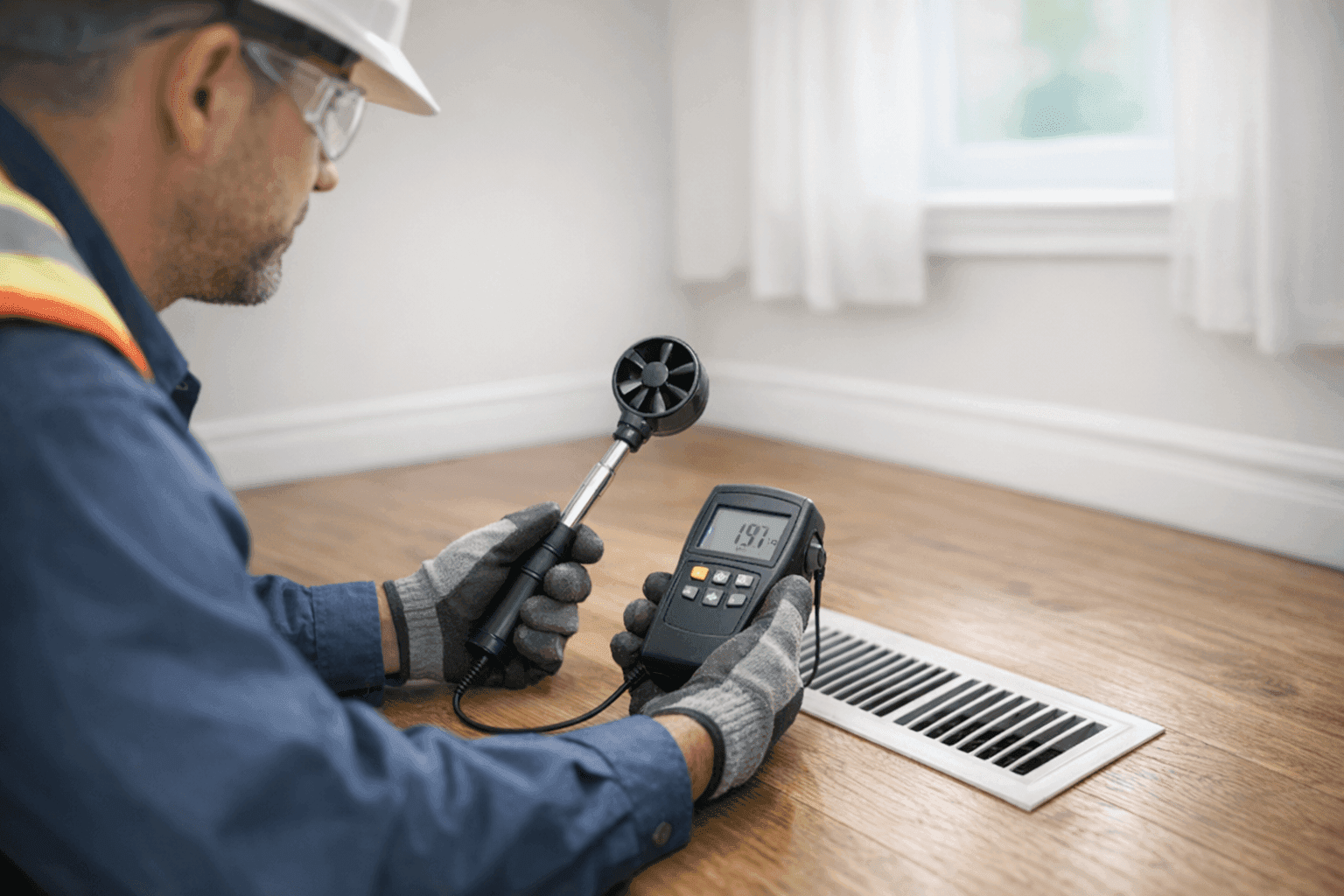
- Use specialized tools to measure airflow at every vent
- Inspect ductwork for hidden leaks, loose joints, or blockages
- Test your system’s blower motor and controls
- Recommend repairs, upgrades, or adjustments to restore balanced comfort
What to Expect When a Technician Arrives
Our team shows up with more than just a flashlight. Expect thorough testing—from measuring airflow with anemometers to using smoke pencils to track leaks. We’ll walk you through the findings, explain your options, and handle repairs with minimal disruption to your home or business.
Prevention & Maintenance: Keeping Airflow Strong
Like changing the oil in your car, regular HVAC maintenance keeps things running smoothly. Here’s how to stay ahead:
- Schedule seasonal maintenance to inspect and tune your system
- Clean ducts every few years to control dust and allergens
- Upgrade to smart thermostats for better control and efficiency
- Consider a home energy audit for a big-picture look at your system’s health
For those searching for "Generator Installation near you," keeping your backup systems maintained also supports overall HVAC performance—especially during outages or storms.
Costs & Time Factors
Fixing poor airflow doesn’t have to break the bank. Simple fixes—like filter changes or vent adjustments—are inexpensive and quick. Duct repairs or professional air balancing, while an investment, can pay off in lower bills and longer system life. Most repairs can be completed in a single visit. Larger ductwork projects may take a day or two.
When It’s an Emergency
Some airflow problems can’t wait. Call Right On AC if:
- Your system won’t turn on, or blows only warm air when cooling is needed
- You smell burning or see smoke
- Allergies or asthma symptoms worsen suddenly with HVAC use
Our HVAC Repair is here when you need it most.
Seasonal Considerations
Spring pollen and fall leaves can clog filters fast. Summer storms may send debris into your outdoor unit, while winter can bring drafts or blockages. Adjust your maintenance schedule to match the season—and always check the filter after big weather events.
Common Mistakes to Avoid
- Forgetting about the return vents—they’re just as important as supply vents
- Installing the wrong size filter, which can restrict airflow
- Closing too many vents in unused rooms, unbalancing the whole system
- Ignoring early warning signs, hoping they’ll resolve on their own
Real-World Timeline & Disruption
Most airflow fixes are quick and non-invasive. Filter swaps take minutes. A thorough duct cleaning or full air balancing might mean a few hours with technicians in your home, but the comfort payoff is worth it.
FAQs: Airflow Questions We Hear Most
How often should I change my filter?
Every 1–3 months, or more often with pets, allergies, or lots of dust.
Can I clean my own ducts?
While you can vacuum vent covers, professional duct cleaning is recommended for deep cleaning and safety.
Will air balancing mess up my home?
No. It’s a precise process that uses instruments and adjustments—no damage, no mess.
Is poor airflow dangerous?
In rare cases, yes. Poor airflow can cause your system to overheat, reduce indoor air quality, and raise fire risks if ignored.
Air Balancing: Local Solutions, Lasting Results
Whether you’re a homeowner or a business manager, don’t let poor airflow run the show. For those seeking cooling specialists or Duct Cleaning in Potomac, Right On AC brings years of experience and the tools to fix airflow issues fast—no guesswork, just steady comfort.
Ready for Comfort? Let’s Get the Air Moving Again
Don’t settle for uneven cooling or stuffy rooms. Call Right On AC now — or reach us anytime at 888-836-1269 .